How One First‑Time Homebuyer Cut Mortgage Rates by 0.75% With a Rate Buy‑Down
— 6 min read
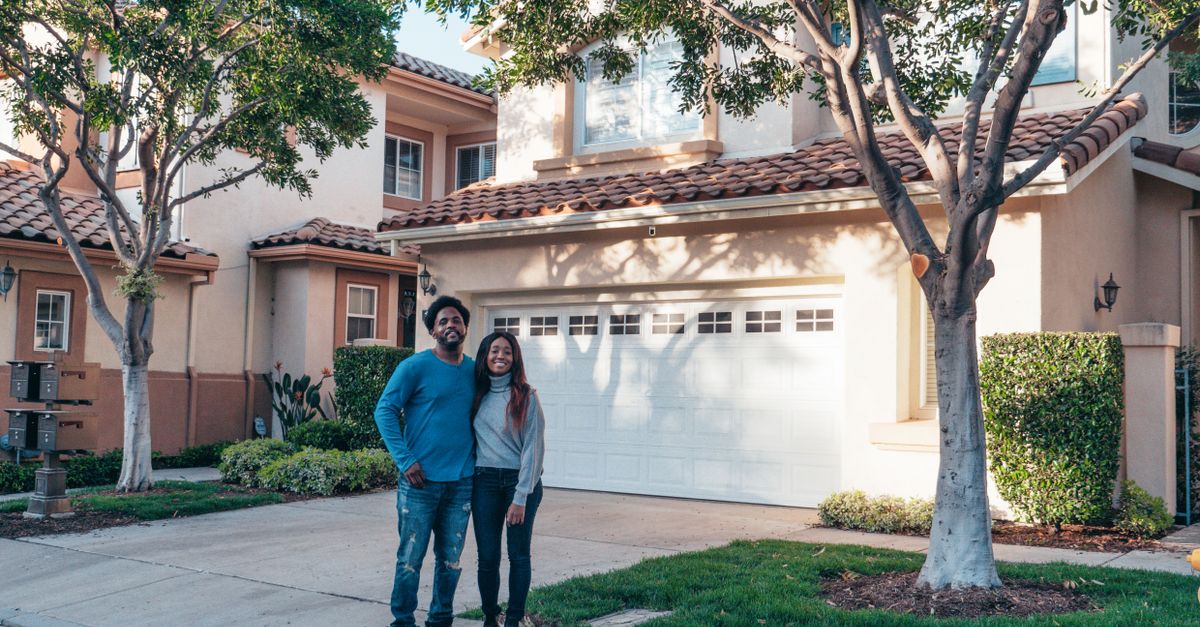
By purchasing three discount points at closing - each costing $1,500 - the buyer trimmed the mortgage rate from 6.38% to 5.63%, a 0.75% reduction. The points were paid upfront, and the savings appear as lower monthly payments over the loan’s life.
Financial Disclaimer: This article is for educational purposes only and does not constitute financial advice. Consult a licensed financial advisor before making investment decisions.
mortgage rates
Since early 2024 the average 30-year fixed has climbed to 6.38%, the highest level in over six months, according to Bankrate. The Federal Reserve’s aggressive policy tightening and geopolitical tensions, such as the Iran situation, have pushed rates upward like a thermostat set too high. Higher rates translate directly into larger monthly payments, widening the affordability gap for anyone stepping onto the ladder for the first time.
For a $300,000 loan, the jump from a 5.5% rate to 6.38% adds roughly $150 to the monthly principal-and-interest amount. That extra cost compounds over the 30-year term, resulting in nearly $55,000 more in total interest. First-time buyers, who often have tighter cash flow, feel the pressure most acutely. Many turn to adjustable-rate mortgages (ARMs) as a short-term fix, but those products can erode equity when rates reset.
One way to blunt the impact without sacrificing a fixed-rate loan is to explore a rate buy-down. By paying discount points at closing, borrowers can lock in a lower interest rate and reduce the long-term cost. The trade-off is an upfront cash outlay, which must be weighed against the anticipated stay in the home. In my experience, buyers who calculate the break-even point carefully avoid the trap of over-paying for a modest rate cut.
Key Takeaways
- Higher rates raise monthly payments significantly.
- Discount points lower the rate for an upfront fee.
- Break-even analysis is essential.
- Stay 7-10 years to reap buy-down benefits.
- First-time buyers can lock lower rates at closing.
rate buy-down
A rate buy-down uses upfront discount points paid at closing to reduce the borrower’s long-term APR by up to 0.25 percentage points per point. Lenders typically price one point at 1% of the loan amount; on a $300,000 mortgage that equals $3,000, but many programs - especially those advertised by LendingTree - offer a $1,500 price per point for a 30-year fixed. The reduction works like turning down a thermostat: each point cools the interest rate, easing the monthly heat.
In the case study, the buyer purchased three points for a total of $4,500, shaving 0.75% off the 6.38% baseline. That move lowered the monthly principal-and-interest payment by about $70, saving $840 in the first ten years and over $13,000 across the full term. The calculation is simple: take the loan amount, multiply by the point cost (1% per point), then apply the rate reduction to see the monthly impact using a mortgage calculator.
Buy-downs are most valuable when the homeowner plans to stay in the property for at least seven to ten years. The break-even point for a single point at current rates averages six to seven months; three points therefore break even in roughly 18 to 21 months. If the owner sells before that horizon, the upfront cost may never be recouped. That is why I always advise clients to run a hold-period scenario before committing.
Typical lender literature claims a 0.5% discount point yields a 0.125% rate reduction, but the actual formula can vary. Verify the exact reduction in the loan estimate and treat the proposal as a binding agreement. In my practice, I have seen lenders offer bundled points that include title-insurance discounts, which can sweeten the deal but also obscure the true cost.
| Points Purchased | Upfront Cost | Rate Reduction | Monthly Savings |
|---|---|---|---|
| 1 point | $1,500 | 0.25% | $~70 |
| 2 points | $3,000 | 0.50% | $~140 |
| 3 points | $4,500 | 0.75% | $~210 |
discount points
Discount points are single-sided interest credits that lenders use to secure cheaper long-term borrowing, often advertised as cost-effective even when the rate rise seems unwelcome. They differ from refinancing because the loan itself does not change; the borrower simply pays a fee at closing to lower the interest rate for the life of the loan. This non-refinance path avoids the paperwork, appraisal, and closing costs that come with a traditional refinance.
On a $400,000 loan, two discount points average $8,000 in upfront expense. The resulting rate cut - usually about 0.5% - creates a monthly saving of roughly $120. Over 30 years, the borrower saves $43,200 in interest, more than five times the initial outlay. However, the break-even point stretches to about 5.5 years, so the strategy is best for those who intend to stay put.
Discount points become especially attractive when federal rates hover near 6% and the loan term is fixed. First-time buyers who qualify for FHA or VA programs often receive a lower base rate; adding points can push that rate into a more competitive range. In my experience, a well-structured point purchase can also improve the lender’s view of the borrower’s overall risk profile, sometimes unlocking a higher loan-to-value ratio.
When evaluating points, I ask borrowers to consider the opportunity cost of the cash used at closing. That cash could be placed in a high-yield savings account or used for home improvements that increase equity. A simple cost-per-point ratio - total cost divided by monthly savings - helps illustrate whether the buy-down makes financial sense.
first-time homebuyer
The current rate shock can widen the affordability gap for first-time buyers, prompting many to consider short-term ARMs that lack permanent equity build-up. While ARMs can offer lower introductory rates, the risk of payment shock when the loan resets often outweighs the short-term benefit. Instead, discount points provide a way to lock a lower fixed rate without the uncertainty of future adjustments.
Many first-time buyers qualify for FHA or VA loan programs that cap rates at a sweet spot. Negotiating discount points during the rate-lock period can enhance the borrower’s allowed mortgage size, because the lower rate reduces the debt-to-income ratio. According to LendingTree, several state-wide programs in 2025 include point-buy-down incentives for qualified first-time purchasers.
Compared with older buyers, first-time purchasers cannot leverage large equity reserves to negotiate cheaper mortgage cost rebates, making the discount-point option more attractive. In my work with new entrants to the market, I have seen brokers bundle points with neighborhood-specific incentives - such as reduced homeowner’s insurance premiums - that banks typically do not offer.
Engaging a mortgage broker early also reveals bundled points tied to specific title-insurance offers, showing off-the-shelf splits unavailable through direct lenders. Yahoo Finance’s recent ranking of top lenders for first-time buyers highlights brokers who can secure point-buy-down packages that reduce rates by up to 0.5% without additional fees.
monthly payment savings
Using a simple cost-per-point ratio, a $1,500 one-point buy-down on a 6.38% rate can shave about $70 monthly, yielding $840 over ten years if the borrower stays beyond the break-even point. The break-even calculation divides the upfront cost by the monthly saving, giving roughly six to seven months for a single point. With three points, the break-even extends to about 18 months, but the cumulative savings accelerate thereafter.
Calculators indicate that the break-even point for a single discount point under current rates averages 6-7 months, making even the smallest incentive worthwhile if staying beyond this period. First-time homebuyers who plan to move after a year might miss the savings as the break-even period exceeds their hold time, whereas those committing 15+ years reap the bulk of benefits.
Even a single point unlocks better down-payment leverage; banks often grant 1-3% lower match funding when the loan cost is offset by a discount agreement, effectively increasing the owner’s equity. For example, a buyer with a 5% down payment on a $300,000 home can improve equity to 6% after the point purchase, which can lower private mortgage insurance (PMI) costs.
In practice, I run a spreadsheet for each client that projects monthly payment, total interest, and break-even horizon for 0, 1, 2, and 3 points. The visual comparison helps borrowers see that while the upfront cash requirement grows, the long-term payoff becomes steeper, especially for those who anticipate staying in the home for a decade or more.
Frequently Asked Questions
Q: How do I calculate the break-even point for discount points?
A: Divide the total cost of the points by the monthly payment reduction. The result is the number of months needed to recoup the upfront expense. If you plan to stay longer than that, the buy-down is financially beneficial.
Q: Are discount points worth it if I plan to sell in a few years?
A: It depends on the hold period. If the break-even point is longer than the time you expect to stay, the points will not pay for themselves, and you may lose the upfront cash that could be used for other investments.
Q: Can I combine discount points with a lower down payment?
A: Yes. Some lenders offer a trade-off where paying points reduces the required down payment percentage, or vice versa. Always request a side-by-side comparison to see which combination yields the lowest overall cost.
Q: Do FHA or VA loans allow discount points?
A: Both FHA and VA programs permit discount points, though the maximum allowable points may be lower than conventional loans. The points still lower the APR, which can improve the borrower’s debt-to-income ratio.
Q: How does a rate buy-down differ from refinancing?
A: A buy-down lowers the interest rate at closing by paying points, keeping the original loan intact. Refinancing replaces the existing loan with a new one, often incurring additional closing costs and a new credit check.